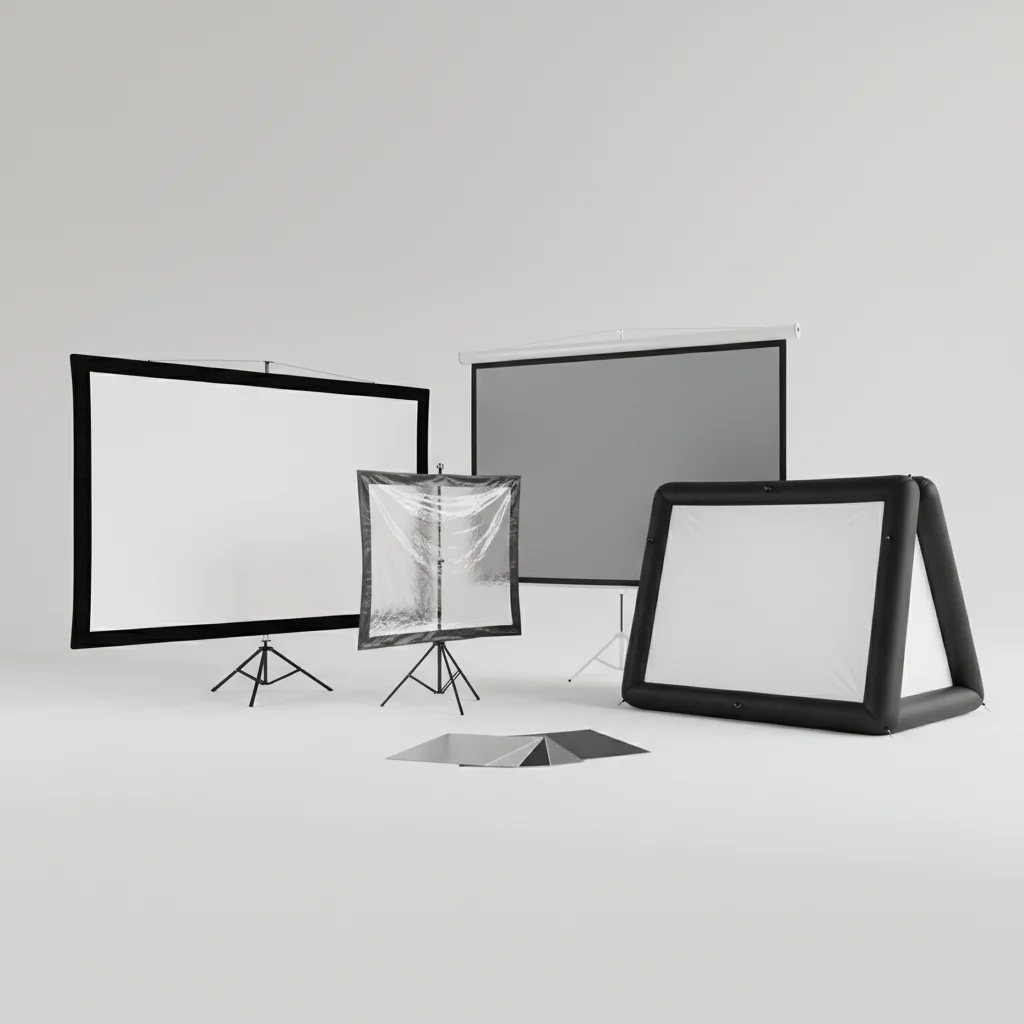
Choosing the right projector screen type is crucial for optimizing your viewing experience, whether for a dedicated home theater or a versatile outdoor setup. There are primarily five main types of projector screens to consider, each offering distinct advantages in terms of installation, portability, and performance. Understanding these differences will help you select the best screen to match your specific needs and environment.
Fixed Frame Projector Screens: The Cinema Standard
Fixed frame projector screens are designed for permanent installation, typically mounted on a wall. They consist of a frame that holds the screen material taut, ensuring a perfectly flat and wrinkle-free surface. This design is ideal for dedicated home theaters where image quality and a professional aesthetic are top priorities. The constant tension on the screen material prevents any ripples or distortions, providing a consistently pristine image. While not portable, their robust construction and superior flatness make them a favorite among cinephiles.
Motorized Projector Screens: Convenience and Discretion
Motorized projector screens offer the ultimate in convenience, retracting into a discreet housing when not in use. These screens can be controlled via remote, wall switch, or even integrated into smart home systems. They are perfect for multi-purpose rooms where a permanent screen would be obtrusive. Available in both ceiling and wall-mounted options, motorized screens provide a clean look and protect the screen material from dust and damage when stored. However, the motor mechanism adds to the cost and complexity compared to manual options.
Portable Projector Screens: Flexibility for Any Location
Portable projector screens are designed for easy setup and takedown, making them ideal for outdoor movie nights, presentations, or temporary indoor setups. These screens often feature lightweight frames and come with carrying bags for effortless transport. Common types include tripod screens, floor-rising screens, and inflatable screens. While offering unparalleled flexibility, some portable screens may not achieve the same level of flatness as fixed or tensioned motorized screens. They are an excellent choice for those who need to move their viewing experience to different locations frequently.
Manual Pull-Down Projector Screens: Simple and Economical
Manual pull-down projector screens are a budget-friendly and straightforward option. They operate with a spring-loaded mechanism, allowing the user to pull the screen down and lock it into place, then gently release it to retract. These screens are suitable for classrooms, conference rooms, or home environments where a simple, non-motorized solution is preferred. While generally reliable, consistent use can sometimes lead to minor wrinkles or uneven retraction over time if not handled carefully. They offer a good balance of affordability and functionality.
Acoustically Transparent Projector Screens: For Immersive Sound
Acoustically transparent projector screens feature micro-perforations or a woven material that allows sound to pass through without significant attenuation. This design enables speakers to be placed directly behind the screen, creating a truly immersive audio-visual experience where sound appears to emanate directly from the on-screen action. This is particularly beneficial for dedicated home theaters aiming for a cinematic soundstage. While they offer superior sound integration, the specialized material can sometimes slightly reduce image brightness or introduce a subtle texture, though modern designs minimize these effects.
Key Considerations When Choosing Your Screen
|
Our Picks for the Best Projector Screen in 2026
As an Amazon Associate I earn from qualifying purchases.
|
||
| Num | Product | Action |
|---|---|---|
| 1 | 120 inch Projector Screen 2025 Upgraded- Black Backing, Straight Edges, Foldable, Washable and Wrinkle-Free - for Indoor Home Theater and Outdoor Cinema -White 16:9 by IOLIEO |

|
| 2 | Pyle 50 Inch Portable Projector Screen with Tripod Stand – Lightweight, Durable, Easy Pull Setup Mobile Projection Screen with 4:3 Aspect Ratio, White Matte Fabric for Indoor/Outdoor Use |
|
| 3 | 120inch Outdoor Projector Screen with Stand: 16:9 4K HD Portable Projector Screen Outdoor Indoor - Front/Rear Movie Screen with Carry Bag, Sandbag - Projection Screen for Backyard, Camping, Theater |
|
| 4 | AAJK Projector Screen 150 inch, Washable Projector Screen 16:9 Foldable Anti-Crease Portable Projector Movies Screen for Home Theater Outdoor Indoor Support Double Sided Projection |
|
| 5 | Projector Screen,HUANYINGBJB 4K 16:9 HD Rear Front Projector Screen Foldable Projection Screen Double-Sided Portable Outdoor Indoor Projector Screens for Movie Home Theater (120) |
|
| 6 | Outdoor Projector Screen with Stand - 120 Inch Portable Projector Screen Indoor and Outdoor Projector Screens 16:9 4K HD Wrinkle Free Lightweight Movie Screen with Carry Bag,Enioy Movie Nights |
|
| 7 | TOWOND Projector Screen with Stand, 100 inch Outdoor Projector Screen Portable Indoor Projection Screen 16:9 4K Rear Front Movie Screen with Carry Bag for Home Backyard Theater 100 inch |
|
| 8 | TOWOND Outdoor Projector Screen with stand, 120 inch Portable Movie Screen - 16:9 4K HD Foldable Anti-Crease Projection Screen with Carry Bag for Movie Nights, Camping and Parties Support Double Sided |
|
| 9 | Taotique Projector Screen 72 inch, Movie Projector Screen 16:9 HD Foldable and Portable Anti-Crease Indoor Outdoor Projection Double Sided Video Projector Screen for Home, Party, Office, Classroom |
|
| 10 | TOWOND Projector Screen and Stand, 150 inch Indoor Outdoor Projection Screen, Portable 16:9 4K HD Rear Front Movie Screen with Carry Bag Wrinkle-Free Design for Home Theater Backyard Cinema |
|
- Room Usage: Dedicated home theater or multi-purpose living space?
- Installation: Permanent wall mount, ceiling mount, or portable setup?
- Budget: Manual screens are generally more affordable than motorized or acoustically transparent options.
- Image Quality: Fixed frames offer the flattest surface, minimizing distortions.
- Sound Integration: Acoustically transparent screens allow for hidden speakers.
Ultimately, the best projector screen type depends on your specific viewing habits, room characteristics, and budget. For a permanent, high-quality home theater, a fixed frame or tensioned motorized screen is often preferred. For versatility and outdoor use, a portable screen is indispensable. Consider how often you’ll use the screen, where it will be located, and what level of convenience and performance you expect.
Get our weekly buyer guide
Practical specs, not advice. Unsubscribe anytime.

I tried a pull-down screen for my living room, hoping for something discreet. While it does retract nicely, I’ve noticed some slight wrinkling on the edges after a few months of use, which is a bit distracting during brighter scenes. It’s okay for the price, but I might consider a tensioned screen next time to avoid that issue. Good for occasional use, but not perfect.
I finally upgraded to a fixed frame projector screen for my basement home theater, and the difference is night and day! The perfectly flat surface really makes a huge impact on image quality, no more wavy lines. It was a bit of a project to install, but totally worth it for that professional, cinema-like feel. Highly recommend for anyone serious about their home viewing.
We got a portable inflatable screen for our backyard movie nights, and it’s been a game-changer. Setup is surprisingly quick, and it’s huge! The kids love it. My only minor complaint is that it can be a bit noisy with the fan running, but once the movie starts, you barely notice it. Great for casual outdoor use.
The motorized projector screen I installed is fantastic! It integrates seamlessly with my smart home system, and being able to hide it away when not in use is a huge plus for our multi-purpose media room. The picture is crisp and clear, and the remote control makes it super convenient. Definitely worth the investment for a clean look.