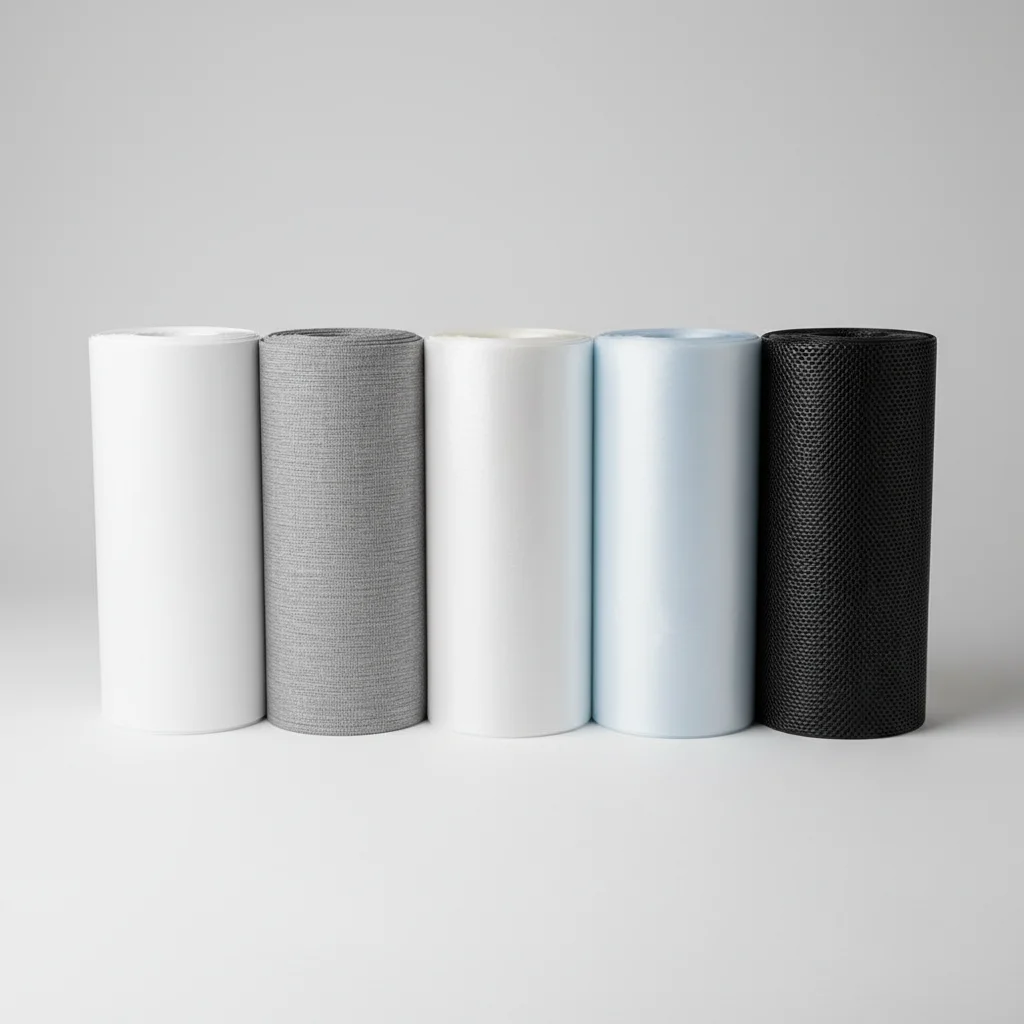
The best projector screen materials for optimal viewing depend on your specific environment and projector, with five main types offering distinct advantages: Matte White for dark rooms, Grey for enhanced contrast in ambient light, Acoustically Transparent for immersive audio, Ambient Light Rejecting (ALR) for bright rooms, and Rear Projection for space-saving setups. Each material impacts brightness, contrast, and color accuracy, making the right choice crucial for your home theater.
Understanding Gain and Viewing Angle
Before selecting a material, understand gain and viewing angle. Gain measures how much light the screen reflects compared to a standard white matte surface (gain of 1.0). Higher gain screens (e.g., 1.5 or 2.0) boost brightness but narrow the viewing angle, causing dimness or distortion from the sides. Lower gain screens (e.g., 0.8) absorb ambient light, improving contrast in brighter rooms but reducing overall brightness. A wider viewing angle ensures consistent image quality for a larger audience.
Matte White Screens: The Versatile Standard
Matte white screens are the most common and versatile option, typically offering a gain of 1.0 to 1.1. They provide excellent color accuracy and a wide viewing angle, making them suitable for most home theater setups where ambient light is controlled. These screens reflect light uniformly, ensuring a consistent image from various seating positions. They are ideal for dedicated dark rooms and projectors with good contrast ratios.
Grey Screens: Enhancing Contrast in Brighter Rooms
Grey screens have a lower gain, usually between 0.8 and 0.9, and are designed to improve black levels and overall contrast in rooms with some ambient light. By absorbing more stray light, they make dark scenes appear richer and deeper. While they slightly reduce overall brightness, this trade-off is often worthwhile for viewers who cannot achieve complete darkness in their viewing space. They are particularly effective with projectors that have high lumen output.
Acoustically Transparent Screens: For Immersive Audio
|
Our Picks for the Best Projector Screen in 2026
As an Amazon Associate I earn from qualifying purchases.
|
||
| Num | Product | Action |
|---|---|---|
| 1 | 120inch Outdoor Projector Screen with Stand: 16:9 4K HD Portable Projector Screen Outdoor Indoor - Front/Rear Movie Screen with Carry Bag, Sandbag - Projection Screen for Backyard, Camping, Theater |

|
| 2 | Taotique Projector Screen 72 inch, Movie Projector Screen 16:9 HD Foldable and Portable Anti-Crease Indoor Outdoor Projection Double Sided Video Projector Screen for Home, Party, Office, Classroom |
|
| 3 | TOWOND Projector Screen with Stand, 100 inch Outdoor Projector Screen Portable Indoor Projection Screen 16:9 4K Rear Front Movie Screen with Carry Bag for Home Backyard Theater 100 inch |
|
| 4 | 120 inch Projector Screen 2025 Upgraded- Black Backing, Straight Edges, Foldable, Washable and Wrinkle-Free - for Indoor Home Theater and Outdoor Cinema -White 16:9 by IOLIEO |
|
| 5 | Projector Screen,HUANYINGBJB 4K 16:9 HD Rear Front Projector Screen Foldable Projection Screen Double-Sided Portable Outdoor Indoor Projector Screens for Movie Home Theater (120) |
|
| 6 | TOWOND Outdoor Projector Screen with stand, 120 inch Portable Movie Screen - 16:9 4K HD Foldable Anti-Crease Projection Screen with Carry Bag for Movie Nights, Camping and Parties Support Double Sided |
|
| 7 | AAJK Projector Screen 150 inch, Washable Projector Screen 16:9 Foldable Anti-Crease Portable Projector Movies Screen for Home Theater Outdoor Indoor Support Double Sided Projection |
|
| 8 | Pyle 50 Inch Portable Projector Screen with Tripod Stand – Lightweight, Durable, Easy Pull Setup Mobile Projection Screen with 4:3 Aspect Ratio, White Matte Fabric for Indoor/Outdoor Use |
|
| 9 | Outdoor Projector Screen with Stand - 120 Inch Portable Projector Screen Indoor and Outdoor Projector Screens 16:9 4K HD Wrinkle Free Lightweight Movie Screen with Carry Bag,Enioy Movie Nights |
|
| 10 | TOWOND Projector Screen and Stand, 150 inch Indoor Outdoor Projection Screen, Portable 16:9 4K HD Rear Front Movie Screen with Carry Bag Wrinkle-Free Design for Home Theater Backyard Cinema |
|
Acoustically transparent screens are perforated or woven to allow sound to pass through without significant attenuation, enabling speakers to be placed directly behind the screen. This creates a more immersive audio-visual experience, as the sound appears to emanate directly from the on-screen action. These screens typically have a gain of 0.8 to 1.0 and require careful consideration of projector placement to avoid visible pixelation. They are a premium choice for dedicated home theaters where audio fidelity is paramount.
Ambient Light Rejecting (ALR) Screens: Battling Brightness
ALR screens are engineered with specialized optical layers that selectively reflect light from the projector while absorbing ambient light from other directions. This technology significantly improves image quality in well-lit rooms, making them an excellent choice for living rooms or multi-purpose spaces. ALR screens come in various forms, including angular reflective and retro-reflective, each optimized for different types of ambient light. They often have a gain between 0.6 and 1.0 and are best paired with ultra-short throw or short-throw projectors.
Rear Projection Screens: Space-Saving Solutions
Rear projection screens are translucent materials designed to have the projector placed behind them, shining light through the screen to the audience. This setup is often used in commercial displays, museums, or situations where front projection is impractical due to space constraints or audience interference. They offer a wide viewing angle and can be effective in brightly lit environments, though they require a dedicated space behind the screen for the projector. The gain can vary significantly depending on the specific material and application.
- Matte White: Best for dark rooms, excellent color accuracy.
- Grey: Improves contrast in rooms with some ambient light.
- Acoustically Transparent: Allows speakers behind the screen for immersive sound.
- ALR: Ideal for bright rooms, rejects ambient light effectively.
- Rear Projection: Space-saving, projector placed behind the screen.
Frequently Asked Questions
What is the most versatile projector screen material for home theaters?
Matte white screens are the most versatile option for home theaters, typically offering a gain of 1.0 to 1.1. They provide excellent color accuracy and a wide viewing angle, making them suitable for most setups where ambient light is controlled.
How do grey projector screens improve image quality in brighter rooms?
Grey projector screens improve image quality in brighter rooms by having a lower gain, usually between 0.8 and 0.9. This allows them to absorb more stray ambient light, which enhances black levels and overall contrast, making dark scenes appear richer.
What are the benefits of an acoustically transparent projector screen?
Acoustically transparent projector screens allow sound to pass through them, enabling speakers to be placed directly behind the screen. This creates a more immersive audio-visual experience where sound appears to emanate directly from the on-screen action, ideal for dedicated home theaters.
When should I consider an Ambient Light Rejecting (ALR) screen?
You should consider an Ambient Light Rejecting (ALR) screen if you plan to use your projector in a well-lit room, such as a living room or multi-purpose space. ALR screens are engineered to selectively reflect projector light while absorbing ambient light, significantly improving image quality in bright environments.
What is 'gain' in relation to projector screen materials?
Gain refers to how much light a projector screen reflects back to the viewer compared to a standard white matte surface, which has a gain of 1.0. A higher gain (e.g., 1.5) makes the image brighter but can narrow the viewing angle, while a lower gain (e.g., 0.8) absorbs more ambient light, improving contrast.
Get our weekly buyer guide
Practical specs, not advice. Unsubscribe anytime.

For my outdoor movie nights, I needed something durable and easy to set up. I ended up getting a portable screen with a standard Matte White surface, and it’s fantastic. The gain of 1.0 works perfectly with my projector, and the image is bright and clear even with a bit of ambient light from the streetlights. It folds up nicely too, which is a huge plus for storage.
I was hesitant about spending extra on an Ambient Light Rejecting (ALR) screen, but it’s been a game-changer for our living room. We have a lot of windows, and before, watching anything during the day was impossible. Now, even with some light, the picture is clear and vibrant. My only minor complaint is that the viewing angle is a bit narrower than I expected, so you have to be more centered.
I finally upgraded my old sheet to a proper screen, and the difference is night and day! I went with a Matte White material for my dedicated home theater, and the colors just pop. The gain of 1.0 is perfect for my dark room, and everyone gets a great view no matter where they sit. Definitely worth the investment for a true cinematic experience.
I tried out a Grey screen hoping to boost contrast in my somewhat bright basement, and while it did help a little, it wasn’t the dramatic improvement I was hoping for. The picture is definitely better than just projecting on the wall, but I still feel like I’m losing some brightness. Maybe I should have gone for a higher gain, but I was worried about the viewing angle issues.