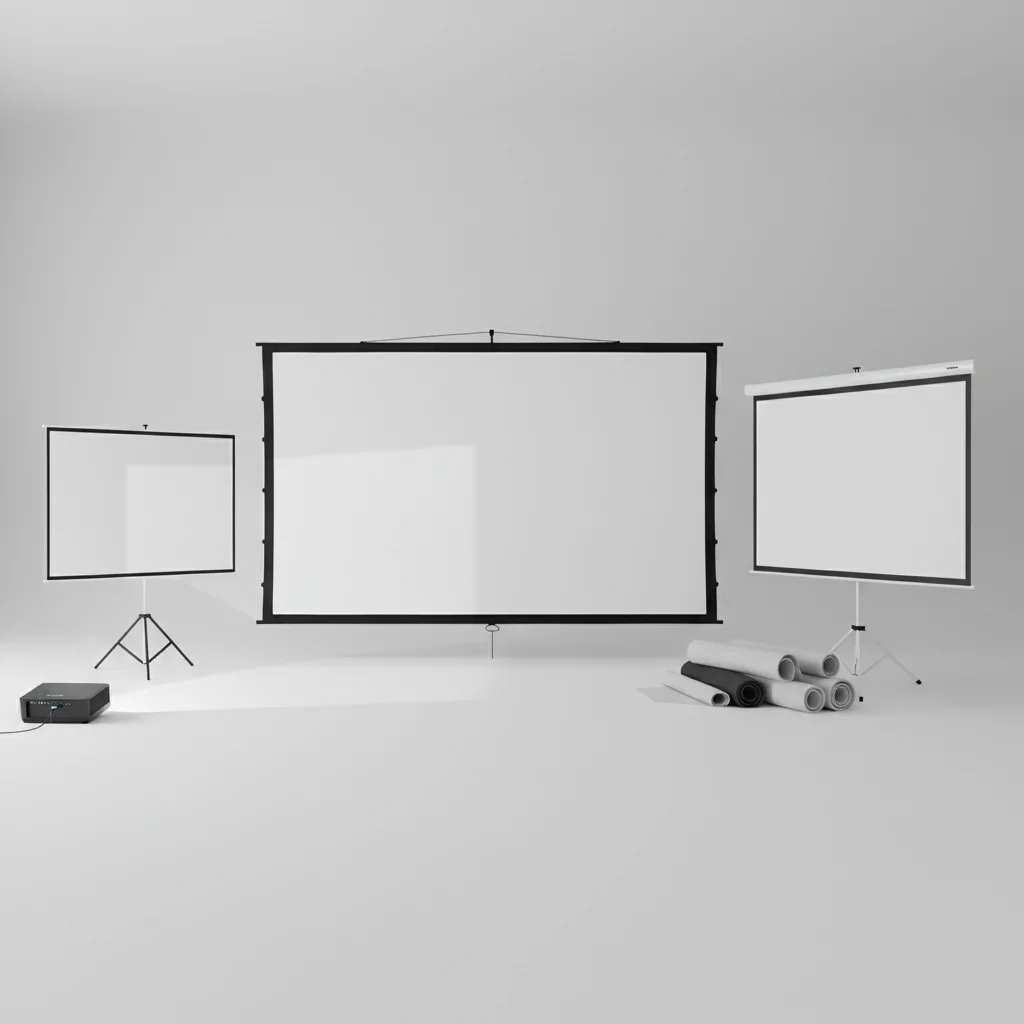
Choosing the correct projector screen size for a home theater or outdoor setup depends on room dimensions, viewing distance, and projector capabilities. For typical home theater setups, screen sizes generally range from 90 to 120 inches diagonally. The ideal size ensures comfortable viewing without eye strain or loss of detail, providing an immersive experience for movies or presentations.
Understanding Viewing Distance and Screen Size
The relationship between viewing distance and screen size is crucial for an optimal viewing experience. A common guideline suggests a viewing distance that is 1.5 to 2 times the diagonal screen size. For example, with a 100-inch screen, the primary viewing distance should be between 150 and 200 inches (12.5 to 16.7 feet). Sitting too close can reveal individual pixels and cause eye fatigue, while sitting too far reduces immersion and makes details harder to see.
Consider the aspect ratio of your content. Most movies and TV shows use a 16:9 aspect ratio, so a screen designed for this ratio offers the most natural viewing. If you frequently watch content in other ratios, such as 2.35:1 for cinematic films, consider a screen with masking options or a custom aspect ratio to avoid black bars.
Room Dimensions and Screen Placement
Your room’s physical dimensions directly limit the maximum screen size you can accommodate. Measure the width and height of the wall where the screen will be installed, accounting for obstructions like windows, doors, or furniture. Leave adequate space around the screen for speakers, lighting, and aesthetic balance. A good rule of thumb is to allow at least 6-12 inches of clearance on all sides of the screen’s active viewing area.
Ceiling height is also a factor, especially for fixed-frame or motorized screens that require mounting. Ensure there is enough vertical space for the screen to fully extend without touching the floor or obstructing other elements. For rooms with lower ceilings, a floor-rising screen might be a more suitable option.
Projector Throw Distance and Brightness
|
Our Picks for the Best Projector Screen in 2026
As an Amazon Associate I earn from qualifying purchases.
|
||
| Num | Product | Action |
|---|---|---|
| 1 | Pyle 50 Inch Portable Projector Screen with Tripod Stand – Lightweight, Durable, Easy Pull Setup Mobile Projection Screen with 4:3 Aspect Ratio, White Matte Fabric for Indoor/Outdoor Use |

|
| 2 | Taotique Projector Screen 72 inch, Movie Projector Screen 16:9 HD Foldable and Portable Anti-Crease Indoor Outdoor Projection Double Sided Video Projector Screen for Home, Party, Office, Classroom |
|
| 3 | 120inch Outdoor Projector Screen with Stand: 16:9 4K HD Portable Projector Screen Outdoor Indoor - Front/Rear Movie Screen with Carry Bag, Sandbag - Projection Screen for Backyard, Camping, Theater |
|
| 4 | TOWOND Projector Screen with Stand, 100 inch Outdoor Projector Screen Portable Indoor Projection Screen 16:9 4K Rear Front Movie Screen with Carry Bag for Home Backyard Theater 100 inch |
|
| 5 | TOWOND Outdoor Projector Screen with stand, 120 inch Portable Movie Screen - 16:9 4K HD Foldable Anti-Crease Projection Screen with Carry Bag for Movie Nights, Camping and Parties Support Double Sided |
|
| 6 | AAJK Projector Screen 150 inch, Washable Projector Screen 16:9 Foldable Anti-Crease Portable Projector Movies Screen for Home Theater Outdoor Indoor Support Double Sided Projection |
|
| 7 | TOWOND Projector Screen and Stand, 150 inch Indoor Outdoor Projection Screen, Portable 16:9 4K HD Rear Front Movie Screen with Carry Bag Wrinkle-Free Design for Home Theater Backyard Cinema |
|
| 8 | Outdoor Projector Screen with Stand - 120 Inch Portable Projector Screen Indoor and Outdoor Projector Screens 16:9 4K HD Wrinkle Free Lightweight Movie Screen with Carry Bag,Enioy Movie Nights |
|
| 9 | 120 inch Projector Screen 2025 Upgraded- Black Backing, Straight Edges, Foldable, Washable and Wrinkle-Free - for Indoor Home Theater and Outdoor Cinema -White 16:9 by IOLIEO |
|
| 10 | Projector Screen,HUANYINGBJB 4K 16:9 HD Rear Front Projector Screen Foldable Projection Screen Double-Sided Portable Outdoor Indoor Projector Screens for Movie Home Theater (120) |
|
The projector’s throw distance and brightness specifications are critical for determining the appropriate screen size. Every projector has a specified throw ratio, which indicates the distance needed to project a certain image size. Consult your projector’s manual or an online throw distance calculator to confirm your chosen screen size is achievable within your room’s layout. An incorrect throw distance can result in an image that is too small, too large, or out of focus for the screen.
Projector brightness, measured in lumens, also plays a role. A larger screen requires more lumens to maintain a bright, vibrant image, especially in rooms with ambient light. For screens over 120 inches, a projector with at least 2,500-3,000 lumens is generally recommended for a well-lit room, while a dedicated dark room might allow for slightly lower lumen counts.
Types of Projector Screens and Their Sizing Considerations
Different types of projector screens have unique sizing considerations. Fixed-frame screens offer a taut, flat surface, ideal for dedicated home theaters where the screen remains permanently in place. Motorized screens provide flexibility, retracting when not in use, making them suitable for multi-purpose rooms. Portable screens are designed for temporary setups and are often smaller, more manageable sizes.
- Fixed-Frame Screens: Offer the most consistent image quality and are available in a wide range of sizes, often up to 150 inches or more.
- Motorized Screens: Provide convenience and can be found in sizes comparable to fixed-frame, though installation can be more complex.
- Manual Pull-Down Screens: A budget-friendly option, typically available in common sizes up to 120 inches.
- Portable Screens: Generally smaller, ranging from 60 to 100 inches, prioritizing ease of transport and quick setup.
- Floor-Rising Screens: Excellent for situations where wall or ceiling mounting isn’t feasible, available in various sizes.
When selecting your screen, also consider the gain of the screen material. A higher gain reflects more light, making the image appear brighter, but can narrow the viewing angle. A lower gain offers wider viewing angles but a slightly dimmer image. Matching the screen gain to your projector’s brightness and room’s ambient light is key for optimal performance.
Final Sizing Recommendations
The right projector screen size balances several factors. For most living rooms or media rooms, a 100-inch to 120-inch screen provides an excellent balance of immersion and practicality. For smaller rooms or dedicated personal viewing spaces, a 90-inch screen might be perfect. Always measure your space, consider your viewing habits, and check your projector’s specifications before making a final decision. A well-chosen screen size will significantly enhance your viewing pleasure and ensure you get the most out of your projection system.
Frequently Asked Questions
What is the ideal viewing distance for a projector screen?
The ideal viewing distance for a projector screen is typically 1.5 to 2 times the diagonal screen size. For example, a 100-inch screen requires a viewing distance between 12.5 and 16.7 feet to prevent eye strain and maintain immersion.
How do room dimensions affect projector screen size selection?
Room dimensions directly impact the maximum screen size you can accommodate. Measure the width and height of the installation wall, allowing 6-12 inches of clearance around the screen for speakers and aesthetic balance. Ceiling height is also important for mounted screens.
What projector brightness is needed for larger screens?
Larger screens require more lumens to maintain a bright, vibrant image. For screens over 120 inches, a projector with at least 2,500-3,000 lumens is generally recommended for a well-lit room. Darker rooms might allow for slightly lower lumen counts.
Which type of projector screen is best for a multi-purpose room?
For a multi-purpose room, a motorized projector screen is often best. These screens offer flexibility by retracting when not in use, making them suitable for spaces that serve various functions beyond just home theater viewing.
Should I consider screen gain when choosing a projector screen?
Yes, screen gain is an important consideration. A higher gain reflects more light, making the image brighter but potentially narrowing the viewing angle. A lower gain offers wider viewing angles but a slightly dimmer image, so match it to your projector's brightness and room's ambient light.
Get our weekly buyer guide
Practical specs, not advice. Unsubscribe anytime.

Good info on the general screen sizes, especially for home theater setups. I appreciate the breakdown of 90 to 120 inches. My only minor complaint is that I wish there was a bit more detail on outdoor screen considerations. It touched on it, but I was hoping for more specific advice for backyard movie nights.
I was really struggling to figure out the right screen size for my new basement home theater. The tip about viewing distance being 1.5 to 2 times the diagonal screen size was a game-changer. Ended up going with a 110-inch screen, and it’s absolutely perfect for our 15-foot viewing distance. No eye strain at all, just pure immersion.
This really helped me confirm my choice. I was debating between a 100-inch and a 120-inch screen for my living room, which is a bit on the smaller side. The explanation about sitting too close and seeing pixels made me realize the 100-inch was the smarter move for my space. It’s a comfortable view now, and movies look fantastic.
Finally, a clear explanation of how room dimensions impact screen choice! I always thought bigger was better, but the point about losing detail if you’re too far away really resonated. We have a larger family room, and the advice helped us confidently select a 120-inch screen that feels just right for everyone.