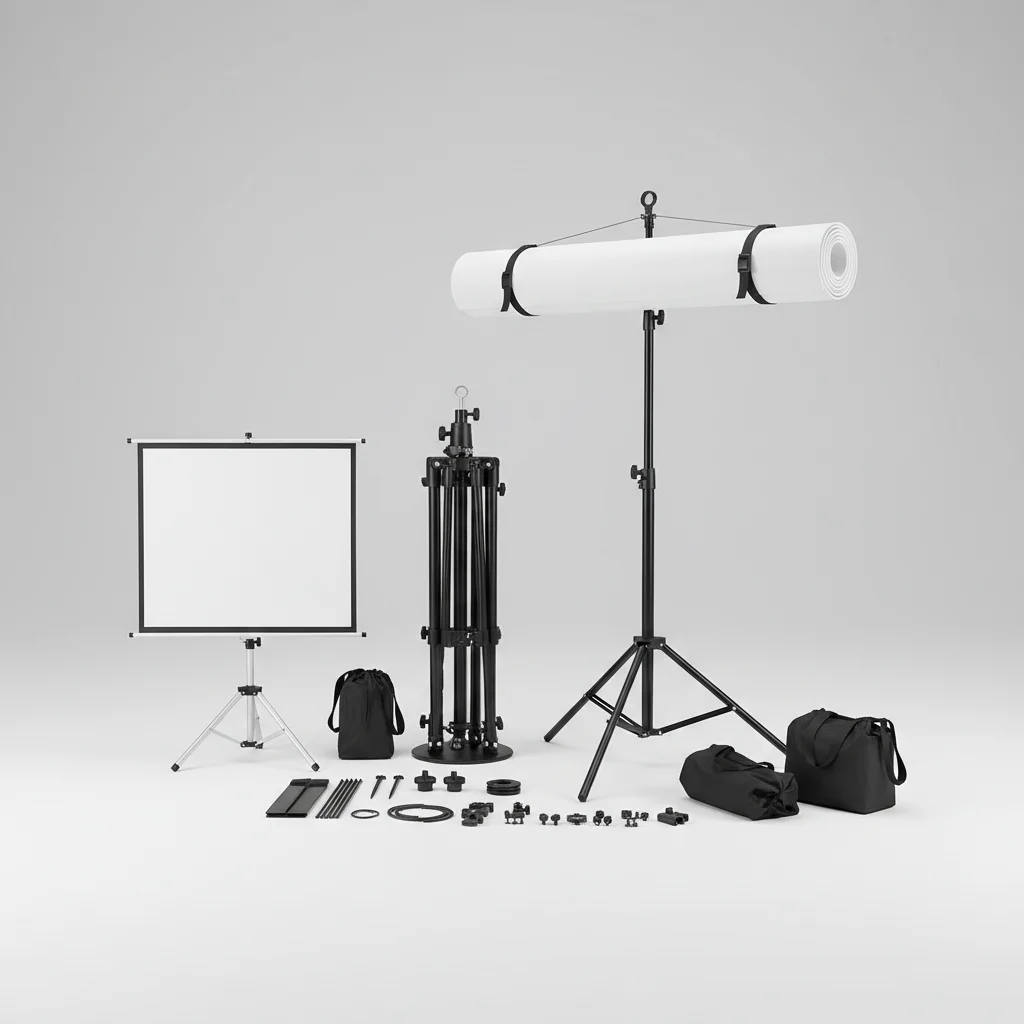
Projector screen stands are a worthwhile investment for anyone seeking portability and flexibility in their viewing setup, offering significant advantages over permanent installations. A good quality stand extends the usability of your projector screen to various indoor and outdoor locations, making it a versatile accessory for presentations, movie nights, and gaming. There are three main types of stands: tripod, floor-rising, and truss systems, each catering to different needs and screen sizes.
Understanding Different Types of Projector Screen Stands
When considering a projector screen stand, it’s crucial to understand the distinct types available and their ideal applications. Tripod stands are the most common and budget-friendly option, perfect for smaller screens and occasional use. They are lightweight, easy to set up, and highly portable, making them a favorite for backyard movie nights or impromptu presentations. However, their stability can be a concern with larger screens or in windy conditions. For expert projector screens reviews on this site.
Floor-rising stands offer a more integrated solution, often featuring a screen that retracts directly into a sturdy base. These are excellent for a cleaner aesthetic and provide better stability than tripods, especially for medium-sized screens up to 120 inches. They are still portable but generally heavier and more expensive. Their self-contained design means less setup time, as the screen and stand are one unit.
Truss systems, on the other hand, are designed for large-format screens, often exceeding 150 inches, and are typically used in professional settings like conferences, concerts, or large outdoor events. These systems provide superior stability and can support heavier screens, but they require more complex assembly and are not designed for frequent relocation. They are the most robust and expensive option, offering unparalleled support for massive displays.
Key Benefits of Using a Projector Screen Stand
The primary benefit of a projector screen stand is its unparalleled portability. Unlike fixed installations, a stand allows you to move your viewing experience from your living room to your patio, a friend’s house, or even a camping trip. This flexibility opens up a world of possibilities for entertainment and presentations, making your projector screen a truly versatile tool.
Another significant advantage is the ease of setup and takedown. Most stands are designed for quick assembly, often requiring no tools. This means you can have your screen ready to go in minutes and pack it away just as fast when you’re done. This convenience is particularly valuable for those who don’t have a dedicated home theater space or who frequently host events.
Stands offer adjustable height and positioning, allowing you to optimize the viewing angle for different audiences and environments. This adjustability ensures that everyone has a clear view, regardless of their seating arrangement or the ambient light conditions. It also helps in aligning the projector image perfectly, which can be challenging with fixed setups.
Factors to Consider Before Buying
|
Our Picks for the Best Projector Screen in 2026
As an Amazon Associate I earn from qualifying purchases.
|
||
| Num | Product | Action |
|---|---|---|
| 1 | TOWOND Projector Screen and Stand, 150 inch Indoor Outdoor Projection Screen, Portable 16:9 4K HD Rear Front Movie Screen with Carry Bag Wrinkle-Free Design for Home Theater Backyard Cinema |

|
| 2 | Projector Screen,HUANYINGBJB 4K 16:9 HD Rear Front Projector Screen Foldable Projection Screen Double-Sided Portable Outdoor Indoor Projector Screens for Movie Home Theater (120) |
|
| 3 | TOWOND Outdoor Projector Screen with stand, 120 inch Portable Movie Screen - 16:9 4K HD Foldable Anti-Crease Projection Screen with Carry Bag for Movie Nights, Camping and Parties Support Double Sided |
|
| 4 | Outdoor Projector Screen with Stand - 120 Inch Portable Projector Screen Indoor and Outdoor Projector Screens 16:9 4K HD Wrinkle Free Lightweight Movie Screen with Carry Bag,Enioy Movie Nights |
|
| 5 | Taotique Projector Screen 72 inch, Movie Projector Screen 16:9 HD Foldable and Portable Anti-Crease Indoor Outdoor Projection Double Sided Video Projector Screen for Home, Party, Office, Classroom |
|
| 6 | TOWOND Projector Screen with Stand, 100 inch Outdoor Projector Screen Portable Indoor Projection Screen 16:9 4K Rear Front Movie Screen with Carry Bag for Home Backyard Theater 100 inch |
|
| 7 | Pyle 50 Inch Portable Projector Screen with Tripod Stand – Lightweight, Durable, Easy Pull Setup Mobile Projection Screen with 4:3 Aspect Ratio, White Matte Fabric for Indoor/Outdoor Use |
|
| 8 | AAJK Projector Screen 150 inch, Washable Projector Screen 16:9 Foldable Anti-Crease Portable Projector Movies Screen for Home Theater Outdoor Indoor Support Double Sided Projection |
|
| 9 | 120inch Outdoor Projector Screen with Stand: 16:9 4K HD Portable Projector Screen Outdoor Indoor - Front/Rear Movie Screen with Carry Bag, Sandbag - Projection Screen for Backyard, Camping, Theater |
|
| 10 | 120 inch Projector Screen 2025 Upgraded- Black Backing, Straight Edges, Foldable, Washable and Wrinkle-Free - for Indoor Home Theater and Outdoor Cinema -White 16:9 by IOLIEO |
|
Before purchasing a projector screen stand, several factors should influence your decision. First, consider the size and weight of your projector screen. A larger, heavier screen will require a more robust and stable stand. Ensure the stand’s weight capacity matches or exceeds your screen’s weight to prevent instability or damage.
Second, think about where and how often you’ll be using the stand. If you plan on frequent travel or outdoor use, prioritize lightweight, durable, and easy-to-assemble options. For more permanent, yet still flexible, indoor setups, a floor-rising stand might be a better fit. For large-scale professional use, a truss system is essential.
Third, evaluate the stand’s stability features. Look for wide bases, locking mechanisms, and sturdy construction materials like aluminum or steel. If you anticipate using it outdoors, consider models with additional anchoring options to withstand wind. Finally, consider your budget, as prices can vary significantly between basic tripod stands and professional truss systems.
- Screen size and weight compatibility
- Intended use (indoor, outdoor, frequency of travel)
- Stability features and construction materials
- Ease of assembly and portability
- Budget and additional features (e.g., carrying case)
Maximizing Your Stand’s Lifespan
To ensure your projector screen stand lasts for years, proper care and maintenance are essential. Always follow the manufacturer’s instructions for assembly and disassembly to avoid unnecessary stress on the components. When storing, make sure the stand is clean and dry to prevent rust or mildew, especially if it has been used outdoors.
Regularly inspect all moving parts, screws, and locking mechanisms for wear and tear. Tighten any loose fasteners and lubricate joints if recommended by the manufacturer. Avoid overloading the stand with a screen heavier than its specified capacity, as this can lead to structural failure. When transporting, use a dedicated carrying case to protect it from bumps and scratches.
By adhering to these simple maintenance practices, you can significantly extend the life of your projector screen stand, ensuring it remains a reliable component of your portable viewing setup for many years to come.Investing a little time in care will save you money and hassle in the long run, allowing you to enjoy countless hours of entertainment or successful presentations wherever you go.
Frequently Asked Questions
What are the main types of projector screen stands available?
There are three primary types of projector screen stands: tripod stands, floor-rising stands, and truss systems. Tripod stands are lightweight and portable for smaller screens, floor-rising stands offer better stability for medium screens up to 120 inches, and truss systems provide superior support for large screens exceeding 150 inches in professional settings.
What are the key benefits of using a portable projector screen stand?
The key benefits of using a portable projector screen stand include unparalleled portability, allowing you to move your viewing experience to various locations. They also offer ease of setup and takedown, often requiring no tools, and provide adjustable height and positioning for optimal viewing angles.
What factors should I consider before buying a projector screen stand?
Before buying, consider the size and weight compatibility with your projector screen, your intended use (indoor, outdoor, frequency of travel), and the stand's stability features. Also, evaluate the ease of assembly, portability, and your budget, as prices vary significantly.
How can I maximize the lifespan of my projector screen stand?
To maximize your stand's lifespan, always follow the manufacturer's instructions for assembly and disassembly. Store it clean and dry, regularly inspect moving parts for wear, and avoid overloading it beyond its specified weight capacity. Using a dedicated carrying case for transport also helps prevent damage.
Are tripod projector stands stable enough for outdoor use?
Tripod projector stands are generally stable for smaller screens and occasional outdoor use, but their stability can be a concern with larger screens or in windy conditions. For enhanced outdoor stability, consider models with wider bases, locking mechanisms, and additional anchoring options.
How to Maximize Your Projector Screen Stand's Lifespan
Proper care and maintenance are essential to ensure your projector screen stand lasts for years, providing reliable support for your portable viewing setup.
Always adhere to the manufacturer's guidelines for assembling and disassembling your projector screen stand. This prevents unnecessary stress on components and ensures correct usage, which is crucial for long-term durability.
After each use, especially outdoors, ensure the stand is clean and completely dry before storing it. This prevents rust, mildew, and other environmental damage, preserving the materials and mechanisms.
Regularly inspect all moving parts, screws, and locking mechanisms for any signs of wear and tear. Tighten loose fasteners and lubricate joints if recommended by the manufacturer to maintain smooth operation and structural integrity.
Never overload the stand with a projector screen heavier than its specified capacity. Exceeding the weight limit can lead to structural failure, damage to the stand, and potential safety hazards for your equipment.
When transporting your projector screen stand, always use a dedicated carrying case. This protects it from bumps, scratches, and other impacts that can occur during transit, ensuring it remains in excellent condition.
Get our weekly buyer guide
Practical specs, not advice. Unsubscribe anytime.

For my dedicated home theater, I initially thought a stand was unnecessary, but the flexibility of a truss system has been amazing. It handles my larger screen perfectly and gives me options for adjusting height and placement that I wouldn’t have with a fixed mount. It really elevates the whole viewing experience.
We use our projector for presentations at work, and a floor-rising stand has been a game-changer. It’s so much more professional than our old setup. My only minor complaint is that it’s a bit heavier than I expected, so it’s not as easy to move between rooms as I’d hoped, but it’s still way better than a permanent installation.
I was on the fence about getting a stand for my outdoor movie nights, but after reading about the portability, I decided to go for it. The tripod stand I got is super easy to set up in the backyard, and it makes such a difference compared to trying to hang the screen from a tree or fence. Definitely worth the investment for anyone who wants to move their setup around.
I got a budget-friendly tripod stand for my smaller screen, and it works okay for occasional use. The setup is simple, which is great. However, I’ve noticed it can be a little wobbly if there’s any wind, which is a bit annoying for outdoor viewing. I guess you get what you pay for, but I wish it felt a bit sturdier.