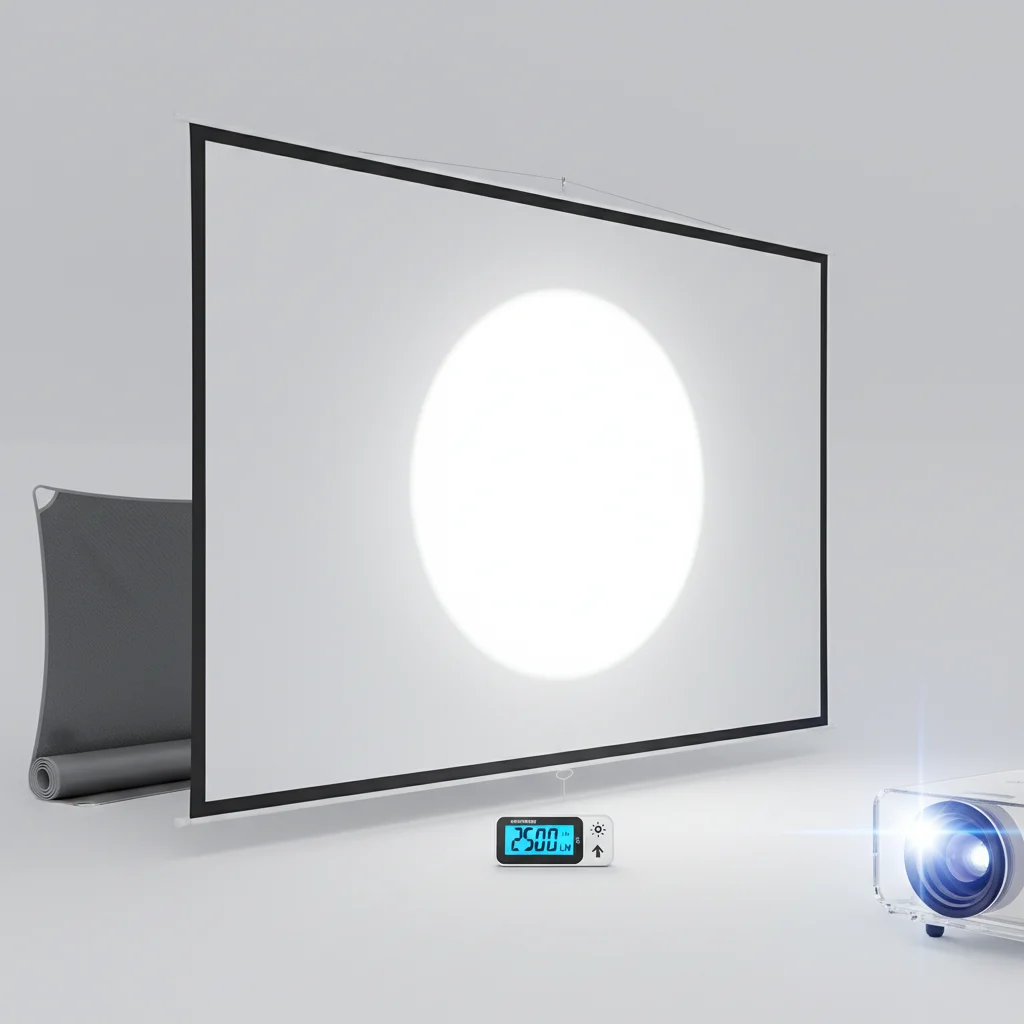
Determining the ideal projector screen brightness, often measured in lumens, is crucial for an optimal viewing experience. For most home theater setups in a dark room, a projector with 1,500 to 2,500 lumens is sufficient. However, for rooms with ambient light or outdoor use, you’ll need significantly more, typically ranging from 3,000 to 5,000+ lumens to combat washout and ensure a vibrant image.
Understanding Lumens and Screen Brightness
Lumens quantify the total amount of light emitted by a projector. While the projector itself produces the light, the screen’s gain and ambient light conditions heavily influence the perceived brightness. A higher lumen count means a brighter image, which is essential when you can’t control external light sources. For dedicated home theaters, lower lumens can actually provide a more cinematic, less fatiguing viewing experience.
Conversely, using a low-lumen projector in a bright room will result in a washed-out, dull image, regardless of screen quality. It’s a common misconception that more lumens are always better; the key is matching the projector’s output to your specific viewing environment and screen type.
Factors Influencing Your Lumen Needs
Several factors dictate how many lumens your projector and screen setup will require. The primary consideration is ambient light. A completely dark room, like a dedicated home theater, needs fewer lumens than a living room with windows or an outdoor setup during dusk. Screen size also plays a role; a larger screen disperses the same amount of light over a greater area, potentially making the image appear dimmer, thus requiring more lumens.
The screen material and its gain also impact perceived brightness. A high-gain screen reflects more light back to the viewer, making the image appear brighter even with a lower-lumen projector. Conversely, a low-gain screen or an ALR (Ambient Light Rejecting) screen might require a higher lumen projector to achieve the same brightness, especially in well-lit environments.
Recommended Lumens for Different Environments
|
Our Picks for the Best Projector Screen in 2026
As an Amazon Associate I earn from qualifying purchases.
|
||
| Num | Product | Action |
|---|---|---|
| 1 | Projector Screen,HUANYINGBJB 4K 16:9 HD Rear Front Projector Screen Foldable Projection Screen Double-Sided Portable Outdoor Indoor Projector Screens for Movie Home Theater (120) |

|
| 2 | Outdoor Projector Screen with Stand - 120 Inch Portable Projector Screen Indoor and Outdoor Projector Screens 16:9 4K HD Wrinkle Free Lightweight Movie Screen with Carry Bag,Enioy Movie Nights |
|
| 3 | Taotique Projector Screen 72 inch, Movie Projector Screen 16:9 HD Foldable and Portable Anti-Crease Indoor Outdoor Projection Double Sided Video Projector Screen for Home, Party, Office, Classroom |
|
| 4 | Pyle 50 Inch Portable Projector Screen with Tripod Stand – Lightweight, Durable, Easy Pull Setup Mobile Projection Screen with 4:3 Aspect Ratio, White Matte Fabric for Indoor/Outdoor Use |
|
| 5 | 120 inch Projector Screen 2025 Upgraded- Black Backing, Straight Edges, Foldable, Washable and Wrinkle-Free - for Indoor Home Theater and Outdoor Cinema -White 16:9 by IOLIEO |
|
| 6 | TOWOND Projector Screen and Stand, 150 inch Indoor Outdoor Projection Screen, Portable 16:9 4K HD Rear Front Movie Screen with Carry Bag Wrinkle-Free Design for Home Theater Backyard Cinema |
|
| 7 | AAJK Projector Screen 150 inch, Washable Projector Screen 16:9 Foldable Anti-Crease Portable Projector Movies Screen for Home Theater Outdoor Indoor Support Double Sided Projection |
|
| 8 | TOWOND Outdoor Projector Screen with stand, 120 inch Portable Movie Screen - 16:9 4K HD Foldable Anti-Crease Projection Screen with Carry Bag for Movie Nights, Camping and Parties Support Double Sided |
|
| 9 | TOWOND Projector Screen with Stand, 100 inch Outdoor Projector Screen Portable Indoor Projection Screen 16:9 4K Rear Front Movie Screen with Carry Bag for Home Backyard Theater 100 inch |
|
| 10 | 120inch Outdoor Projector Screen with Stand: 16:9 4K HD Portable Projector Screen Outdoor Indoor - Front/Rear Movie Screen with Carry Bag, Sandbag - Projection Screen for Backyard, Camping, Theater |
|
The ideal lumen range varies significantly based on where and how you plan to use your projector screen. For a dark home theater, 1,500-2,500 lumens is often perfect, allowing for deep blacks and excellent contrast. If your viewing space has some ambient light, such as a living room with curtains, aim for 2,500-3,500 lumens. This range helps cut through moderate light without over-brightening the image.
For outdoor movie nights or presentations in brightly lit conference rooms, you’ll need a projector with 3,500 lumens or more. Some outdoor projectors can even reach 5,000+ lumens to ensure visibility under challenging light conditions. Always consider the specific conditions you’ll be projecting in before making a purchase decision.
- Dark Home Theater: 1,500-2,500 lumens for cinematic quality.
- Living Room (Moderate Light): 2,500-3,500 lumens to combat ambient light.
- Outdoor/Bright Rooms: 3,500-5,000+ lumens for clear visibility.
- Gaming Setups: Often benefit from higher lumens (2,500+) for vibrant, fast-paced visuals.
- Portable Projectors: Can range from 500-2,000 lumens, depending on intended use.
The Role of Screen Gain and ALR Technology
While lumens are about the projector’s output, screen gain describes how reflective a screen material is. A screen with a gain of 1.0 reflects light equally in all directions, maintaining the projector’s original brightness. A gain higher than 1.0, like 1.2 or 1.5, will make the image appear brighter to viewers directly in front of the screen, but viewing angles might be narrower. Conversely, a gain lower than 1.0 can improve black levels but will require more lumens from the projector.
Ambient Light Rejecting (ALR) screens are designed to selectively reflect light from the projector while absorbing light from other sources. This technology is incredibly effective in rooms with significant ambient light, allowing you to use a lower-lumen projector than you would with a standard white screen in the same conditions. When pairing an ALR screen, ensure your projector’s lumen output is still adequate for the screen size and your specific viewing distance.
Optimizing Your Setup for Best Brightness
Achieving the best possible brightness involves more than just buying a high-lumen projector. Start by controlling ambient light as much as possible; blackout curtains are a game-changer for home theaters. Next, choose a screen with appropriate gain for your room and viewing habits. If you have a very bright room, an ALR screen is a wise investment. Ensure your projector is positioned correctly, as off-axis projection can sometimes reduce perceived brightness and introduce keystone distortion.
Regular maintenance, such as cleaning your projector’s lens and filters, also helps maintain optimal light output over time. Over time, projector lamps can dim, so consider lamp replacement if you notice a significant drop in brightness. By carefully balancing your projector’s lumen output with your screen choice and room environment, you can achieve a stunningly bright and clear image.
Get our weekly buyer guide
Practical specs, not advice. Unsubscribe anytime.

I was really struggling with my outdoor movie nights because the image always looked so washed out, even at dusk. After reading about the need for higher lumens for outdoor use, I upgraded my projector to one with 4000 lumens. What a difference! The picture is finally vibrant and clear, even with some ambient light from the neighbors. Definitely worth the investment for a great outdoor viewing experience.
This really helped me understand why my old projector wasn’t cutting it. I have a dedicated home theater room that’s pretty dark, and I was actually overshooting with a super bright projector. I’ve since dialed it back to around 2000 lumens, and the cinematic feel is so much better. It’s less fatiguing on the eyes too. Glad I learned about the balance between lumens and room darkness.
My old projector was only 1200 lumens and I just couldn’t get a good picture in my basement, even though it’s not super bright down there. I thought it was my screen, but it turns out I just needed more light from the projector itself. Upgraded to a 2800 lumen model and the difference is night and day. The image is crisp and bright now, no more dull colors. Very happy with the results.
I got a new projector for my living room, which has a fair amount of natural light during the day. I aimed for something in the 3000-lumen range as suggested for rooms with ambient light. While it’s definitely better than my old one, I still find myself having to close the blinds completely for the best picture. I was hoping for a bit more flexibility without total darkness, but it’s a decent improvement.