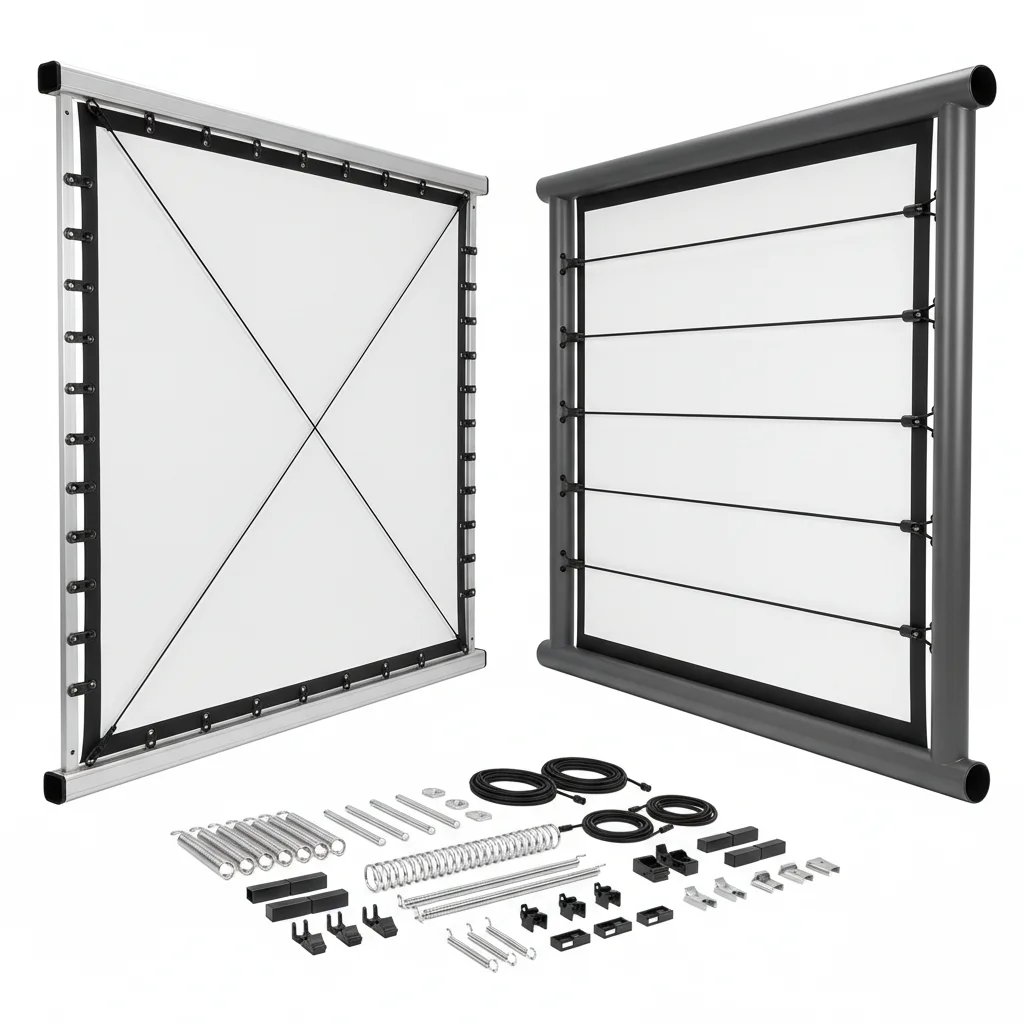
Projector screen tensioning systems are designed to prevent wrinkles and ensure a perfectly flat viewing surface. These systems typically employ a series of elastic cords, springs, or weighted bars that pull the screen material taut from the sides or bottom. A well-implemented tensioning system can significantly improve picture quality by eliminating distortions caused by ripples or creases in the screen, providing a consistently smooth and professional presentation.
Understanding Different Tensioning Methods
There are several common methods used in projector screen tensioning. Tab-tensioned screens, for example, feature small tabs along the screen’s vertical edges that connect to elastic cords running through the housing. These cords apply constant outward pressure, keeping the viewing surface flat. Another method involves weighted bars at the bottom of the screen, which use gravity to pull the material taut. Some fixed-frame screens utilize a series of springs or clips around the perimeter to stretch the fabric evenly across the frame.
Each method has its advantages. Tab-tensioned systems are popular for motorized and pull-down screens due to their effectiveness in maintaining flatness during retraction and extension. Fixed-frame screens with spring or clip tensioning offer a permanently flat surface, ideal for dedicated home theaters where the screen remains stationary. Understanding these differences helps in selecting the most appropriate system for your specific setup and screen type.
Benefits of a Taut Projector Screen
A perfectly flat projector screen offers numerous benefits for your viewing experience. Firstly, it eliminates visual distortions such as hot spots and warped images that can occur on an uneven surface. This ensures that the projected image is displayed accurately, with crisp details and uniform brightness across the entire screen. Secondly, a taut screen enhances the perceived contrast and color accuracy, as light is reflected more consistently without being scattered by wrinkles.
Furthermore, a wrinkle-free screen contributes to a more professional and immersive viewing environment. Whether you’re watching a movie, playing video games, or giving a presentation, the absence of distracting imperfections allows you to focus entirely on the content. This attention to detail can significantly elevate the overall quality of your home theater or presentation setup.
Installation and Maintenance Considerations
|
Our Picks for the Best Projector Screen in 2026
As an Amazon Associate I earn from qualifying purchases.
|
||
| Num | Product | Action |
|---|---|---|
| 1 | Taotique Projector Screen 72 inch, Movie Projector Screen 16:9 HD Foldable and Portable Anti-Crease Indoor Outdoor Projection Double Sided Video Projector Screen for Home, Party, Office, Classroom |

|
| 2 | Pyle 50 Inch Portable Projector Screen with Tripod Stand – Lightweight, Durable, Easy Pull Setup Mobile Projection Screen with 4:3 Aspect Ratio, White Matte Fabric for Indoor/Outdoor Use |
|
| 3 | Projector Screen,HUANYINGBJB 4K 16:9 HD Rear Front Projector Screen Foldable Projection Screen Double-Sided Portable Outdoor Indoor Projector Screens for Movie Home Theater (120) |
|
| 4 | Outdoor Projector Screen with Stand - 120 Inch Portable Projector Screen Indoor and Outdoor Projector Screens 16:9 4K HD Wrinkle Free Lightweight Movie Screen with Carry Bag,Enioy Movie Nights |
|
| 5 | TOWOND Projector Screen with Stand, 100 inch Outdoor Projector Screen Portable Indoor Projection Screen 16:9 4K Rear Front Movie Screen with Carry Bag for Home Backyard Theater 100 inch |
|
| 6 | AAJK Projector Screen 150 inch, Washable Projector Screen 16:9 Foldable Anti-Crease Portable Projector Movies Screen for Home Theater Outdoor Indoor Support Double Sided Projection |
|
| 7 | 120inch Outdoor Projector Screen with Stand: 16:9 4K HD Portable Projector Screen Outdoor Indoor - Front/Rear Movie Screen with Carry Bag, Sandbag - Projection Screen for Backyard, Camping, Theater |
|
| 8 | TOWOND Outdoor Projector Screen with stand, 120 inch Portable Movie Screen - 16:9 4K HD Foldable Anti-Crease Projection Screen with Carry Bag for Movie Nights, Camping and Parties Support Double Sided |
|
| 9 | 120 inch Projector Screen 2025 Upgraded- Black Backing, Straight Edges, Foldable, Washable and Wrinkle-Free - for Indoor Home Theater and Outdoor Cinema -White 16:9 by IOLIEO |
|
| 10 | TOWOND Projector Screen and Stand, 150 inch Indoor Outdoor Projection Screen, Portable 16:9 4K HD Rear Front Movie Screen with Carry Bag Wrinkle-Free Design for Home Theater Backyard Cinema |
|
Proper installation is crucial for the effective operation of any projector screen tensioning system. For tab-tensioned screens, ensuring the cords are evenly tensioned is key to preventing uneven pulling and potential new wrinkles. Fixed-frame screens require careful stretching of the material during assembly to achieve a uniformly flat surface. Always follow the manufacturer’s instructions meticulously to guarantee optimal performance and longevity of your screen.
Maintenance for tensioning systems is generally minimal. For tab-tensioned screens, occasionally checking the elastic cords for wear or loss of elasticity can be beneficial. Keeping the screen material clean and free from dust or debris also helps maintain its integrity and prevents any foreign objects from interfering with the tensioning mechanism. Regular, gentle cleaning with appropriate solutions will preserve the screen’s surface and the effectiveness of its tensioning system.
When is a Tensioned Screen Essential?
A tensioned projector screen is particularly essential in situations where image quality and a pristine viewing surface are paramount. This includes dedicated home theaters, professional presentation rooms, and any environment where high-definition content is frequently displayed. For ultra-short throw (UST) projectors, a perfectly flat screen is even more critical, as the shallow projection angle can exaggerate even minor imperfections on the screen surface, leading to noticeable distortions.
While a tensioned screen might represent a higher initial investment compared to non-tensioned alternatives, the long-term benefits in terms of image quality and viewing pleasure often outweigh the cost. Consider your viewing habits, projector type, and the importance of a flawless image when deciding if a tensioned screen is the right choice for your setup. For those seeking the ultimate cinematic experience, a tensioned screen is an invaluable component.
- Eliminates ripples and waves for a perfectly flat surface.
- Enhances image clarity, contrast, and color accuracy.
- Crucial for ultra-short throw projectors to prevent distortion.
- Provides a more professional and immersive viewing experience.
- Extends the lifespan of the screen material by preventing creasing.
Alternatives to Tensioned Screens
While tensioned screens offer superior flatness, there are alternatives for those with different budgets or specific needs. Non-tensioned pull-down screens are more affordable but are prone to developing waves or wrinkles over time, especially with frequent use. Projector screen paint can create a large, fixed surface, but its quality depends heavily on the application and wall smoothness, and it lacks the specialized optical properties of dedicated screen materials.
For temporary or highly portable setups, inflatable screens or simple fabric screens might suffice, though they will not offer the same level of flatness or image fidelity as a tensioned screen. Ultimately, the choice depends on balancing performance expectations with budget and practical considerations. For serious home theater enthusiasts, a tensioned screen remains the gold standard for achieving a truly immersive and high-quality visual experience.
Get our weekly buyer guide
Practical specs, not advice. Unsubscribe anytime.
